"Godfather of AI" leaves Google to raise awareness about AI's potential risks
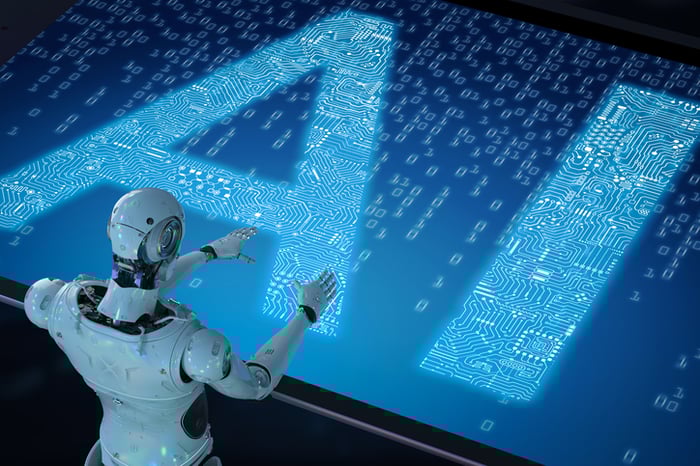
Artificial Intelligence (AI) has become an increasingly ubiquitous technology in our daily lives, from chatbots to personalized recommendations and autonomous vehicles. AI has the potential to revolutionize industries, create new job opportunities, and enhance human capabilities in various fields such as healthcare, transportation, and communication. However, AI also has the potential to cause harm, from widespread job displacement to biases and discrimination, as well as the potential for autonomous weapons and the spread of misinformation. The recent departure of Geoffrey Hinton, the 'Godfather of AI,' from Google highlights the growing concerns around AI's risks, prompting discussions about the responsible development and use of this powerful technology.
Geoffrey Hinton, who has been dubbed the "Godfather of AI," recently left his role at Google to speak out about the potential dangers of the technology he helped to develop. Hinton's work on neural networks helped shape artificial intelligence systems that power many of today's products. Despite his contributions, Hinton has since expressed concerns about the technology and his role in advancing it.
In a tweet, Hinton clarified that he left Google so he could speak freely about the risks of AI without considering how this impacts Google. He emphasized that Google has acted responsibly, and Jeff Dean, the chief scientist at Google, expressed his appreciation for Hinton's contributions and reaffirmed the company's commitment to a responsible approach to AI.
Hinton's decision to step back from the company and speak out on the technology comes amid a growing number of concerns about the potential for AI-powered chatbots to spread misinformation and displace jobs. The attention around ChatGPT last year helped renew an arms race among tech companies to develop and deploy similar AI tools in their products. While OpenAI, Microsoft, and Google are at the forefront of this trend, other companies such as IBM, Amazon, Baidu, and Tencent are also working on similar technologies.
In an interview with the New York Times, Hinton echoed concerns about AI's potential to eliminate jobs and create a world where many will "not be able to know what is true anymore." He also pointed to the stunning pace of advancement, far beyond what he and others had anticipated. Hinton is not the first Google employee to raise a red flag on AI; in July, the company fired an engineer who claimed an unreleased AI system had become sentient.
The growing concerns about AI's potential dangers have prompted some prominent figures in tech to call for a moratorium on the training of the most powerful AI systems for at least six months. The Future of Life Institute, a nonprofit backed by Elon Musk, published a letter signed by several tech leaders in March, citing "profound risks to society and humanity." The letter came just two weeks after OpenAI announced GPT-4, an even more powerful version of the technology that powers ChatGPT.
Hinton's decision to speak out about the potential dangers of AI is a reminder that technological progress is not always beneficial. While AI has the potential to revolutionize society in positive ways, it is important to consider the risks and mitigate them. Companies like Google have a responsibility to develop AI in a responsible manner, and tech leaders must prioritize the well-being of society over short-term profits. By raising awareness about the potential dangers of AI, Hinton, and other advocates can help ensure that the technology is used for good and not harm.


Comments
Post a Comment